Philosophy & Religion
Click links to check availability.
 by Sam Eldredge (Get the Book)
John Eldredge (Wild at Heart) is joined by his son, Sam, for a give-and-take examination of what it takes to become a man. A writer in his 20s, Sam asks advice from his father John, a Christian counselor, author, and adventurer, and John responds. The elder Eldredge rejects the hackneyed "the journey is the destination" language, instead counseling his son that it's time to enter into the "warrior" phase of becoming who you are meant to be. With allusions and stories drawn from literature, global adventures, mistakes John has made, and sound fatherly advice, the book also includes prayers for guidance and for sexual healing. For John Eldredge fans, seeing the younger and more idealistic Eldredge not getting doused with cold water and told to grow up, but instead fanned into flame by his father is pure gold for fathers and their young adult sons. --Publishers Weekly
 by Stasi Eldredge (Get the Book)
With a writing style that makes the reader feel she is having an intimate chat over coffee with a close friend, Eldredge, who co-authored the bestselling Captivating and Love and War with her husband John, goes solo for this journey to the development of life-changing self-esteem. She offers practical ways to embrace the unique dream God has for each woman's life regardless of past mistakes or present feelings of inadequacy. Transformation must happen from the inside out, she says, but until women can see themselves through God's eyes, it won't happen. She offers humor, liberating insights, biblical lessons, and insightful imagery colored by blunt talk and brutally honest personal examples-including her battles with weight gain-to encourage women to see themselves in a different light. The conversation rambles as chats between friends do, but focus can become foggy. Study notes at the end of chapters or in the rear of the book might have been helpful tools for pulling concepts together and providing ways for digesting more of this meaty food for thought. --Publishers Weekly
 by Michael Harris (Get the Book)
"Every revolution in communication technology from papyrus to the printing press to Twitter -is as much an opportunity to be drawn away from something as it is to be drawn toward something. And yet, as we embrace technology's gifts, we usually fail to consider what we're giving up in the process. Why would we bother to register the end of solitude, of ignorance, of lack? Why would we care that an absence had disappeared?" Soon enough, nobody will remember life before the Internet. What does this unavoidable fact mean? For future generations, it won't mean anything very obvious. They will be so immersed in online life that questions about the Internet's basic purpose or meaning will vanish. But those of us who have lived both with and without the crowded connectivity of online life have a rare opportunity. We can still recognize the difference between Before and After. We catch ourselves idly reaching for our phones at the bus stop. Or we notice how, mid-conversation, a fumbling friend dives into the perfect recall of Google. In this eloquent and thought-provoking book, Michael Harris argues that amid all the changes we're experiencing, the most interesting is the one that future generations will find hardest to grasp. That is the end of absence-the loss of lack. The daydreaming silences in our lives are filled; the burning solitudes are extinguished. There's no true "free time" when you carry a smartphone. Today's rarest commodity is the chance to be alone with your own thoughts. (Summary)
 by Joona Taipala (Get the Book)
At the dawn of the modern era, philosophers reinterpreted their subject as the study of consciousness, pushing the body to the margins of philosophy. With the arrival of Husserlian thought in the late nineteenth century, the body was once again understood to be part of the transcendental field. And yet, despite the enormous influence of Husserl's phenomenology, the role of "embodiment" in the broader philosophical landscape remains largely unresolved. In his ambitious debut book, Phenomenology and Embodiment, Joona Taipale tackles the Husserlian concept--also engaging the thought of Maurice Merleau-Ponty, Jean-Paul Sartre, and Michel Henry--with a comprehensive and systematic phenomenological investigation into the role of embodiment in the constitution of self-awareness, intersubjectivity, and objective reality. In doing so, he contributes a detailed clarification of the fundamental constitutive role of embodiment in the basic relations of subjectivity. (Summary)
 by Bill Hybels (Get the Book)
Getting caught up in the busyness of life, with its clutter and its crazy pace, can harm relationships, jobs, sanity, and health. But how can one simplify life by letting go of anxiety and spending time on the most important things? Influential pastor Hybels (Too Busy Not to Pray), founder of Willow Creek Community Church, gently but firmly points out common stress-inducing topics and offers ways of coping with them that are alternatives to the typical frenetic response. Among those topics are over-scheduling, forgiveness, finances, anxiety, and the workplace. He likens personal fulfillment to an "energy bucket." That bucket is filled when people are happy at work, but leaks profusely when individuals are miserable. Those unhappy with work should consider leaving it to do something enjoyable, and work around the financial aspects. "Simplicity cannot be achieved without clarity about the big-picture target of your life," Hybels says. Instead of cluttering the calendar with things that have to be done in the next 30 days, he suggests asking, "Who do I want to become in this next season of my life?" and then using the calendar to help accomplish those goals. Readers who are ready to take somewhat drastic measures to simplify their lives will be ready to implement all 10 of Hybels' practices, while others may need to pick which ones are the most immediately doable and tackle the others when they're ready. --Publishers Weekly
 by Charles J. Healey (Get the Book)
Charles J. Healey, SJ, is an adjunct professor at Blessed John XXIII National Seminary in Weston, Massachusetts, and chaplain to the alumni at Boston College High School. He teaches summers in the graduate program in spirituality at Creighton University in Omaha, Nebraska. Fr. Healey holds a doctorate in theology from the Gregorian University in Rome. He is the author of several books, including The Ignatian Way (Paulist Press).
A Jesuit priest and teacher presents a rich treasury of materials for prayer and meditation produced by a great cloud of Jesuit witnesses beginning with St. Ignatius Loyola, founder of the Society of Jesus, and continuing right to the present day. (Summary)
 by Diane M. Houdek (Get the Book)
Pope Francis has set a new tone for the interaction between the church and the world, and that tone is one of joy, hope, and new life. Like his namesake, St. Francis of Assisi, he locates that joy in a personal encounter with Christ in the Gospels. By reflecting on his words and following his example, Christians can transform their own lives and relationships. Pope Francis and Our Call to Joy looks to discover the real Jesus in the Gospels, to understand the Church in the real world, to locate the special place of the poor and vulnerable and to find peace and the common good as part of our call in life. Reflections, discussion questions and suggestions for action take Pope Francis's accessible words of encouragement and apply them to the everyday life of ordinary Christians. (Summary)
 (Get the Book)
One of the perennial themes in philosophy is the problem of our access to the world around us; do our perceptual systems bring us into contact with the world as it is or does perception depend upon our individual conceptual frameworks? This volume of new essays examines reference as it relates to perception, action and realism, and the questions which arise if there is no neutral perspective or independent way to know the world. The essays discuss the nature of referring, concentrating on the way perceptual reference links us with the observable world, and go on to examine the implications of theories of perceptual reference for realism and the way in which scientific theories refer and thus connect us with the world. They will be of interest to a wide range of readers in philosophy of science, epistemology, philosophy of psychology, cognitive science, and action theory. (Summary)
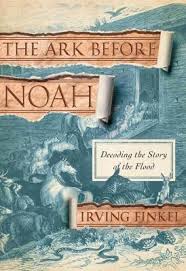 by Irving L. Finkel (Get the Book)
The recent translation of a Babylonian tablet launches a groundbreaking investigation into one of the most famous stories in the world, challenging the way we look at ancient history. nbsp; Since the Victorian period, it has been understood that the story of Noah, iconic in the Book of Genesis, and a central motif in Judaism, Christianity and Islam, derives from a much older story that existed centuries before in ancient Babylon. But the relationship between the Babylonian and biblical traditions was shrouded in mystery. Then, in 2009, Irving Finkel, a curator at the British Museum and a world authority on ancient Mesopotamia, found himself playing detective when a member of the public arrived at the museum with an intriguing cuneiform tablet from a family collection. Not only did the tablet reveal a new version of the Babylonian Flood Story; the ancient poet described the size and completely unexpected shape of the ark, and gave detailed boat building specifications. Decoding this ancient message wedge by cuneiform wedge, Dr. Finkel discovered where the Babylonians believed the ark came to rest and developed a new explanation of how the old story ultimately found its way into the Bible. In The Ark Before Noah , Dr. Finkel takes us on an adventurous voyage of discovery, opening the door to an enthralling world of ancient voices and new meanings. (Publisher)
 by Matthew Fox (Get the Book)
In May, 2012, Pope Benedict XVI formally declared 12th century Benedictine nun Hildegard of Bingen a canonized saint, with the canonization ceremony scheduled for October. He regards her as one of the great thinker who has helped shape the thought of the Catholic Church. Today there are many websites and Hildegard groups that celebrate and honor Hildegard's teachings, philosophy, art, and music. Author Matthew Fox writes in Hildegard of Bingen about this amazing woman and what we can learn from her. In an era when women were marginalized, Hildegard was an outspoken, controversial figure. Yet so visionary was her insight that she was sought out by kings, popes, abbots, and bishops for advice. A sixteenth century follower of Martin Luther called her "the first Protestant" because of her appeals to reform the church. As a writer, composer, philosopher, Christian mystic, Benedictine abbess, healer, artist, feminist, and student of science, Hildegard was a pioneer in many fields in her day. For many centuries after her death Hildegard was ignored or even ridiculed but today is finally being recognized for her immense contribution to so many areas, including our understanding of our spiritual relationship to the earth--a contribution that touches on key issues faced by our planet in the 21st century, particularly with regard to the environment and ecology. (Publisher)

 by Sam Eldredge (Get the Book)


